The Internet Made Attention Feel Like Love
The Internet Made Attention Feel Like Love
Human beings have always wanted to feel seen. Long before social media existed, people searched for belonging through friendships, family, relationships, religion, community, and shared experiences. Attention itself was never inherently unhealthy. Feeling acknowledged and emotionally understood is part of being human. The problem is that modern internet culture has transformed attention into something much deeper than visibility. In many ways, the internet has trained people to emotionally interpret attention as love.
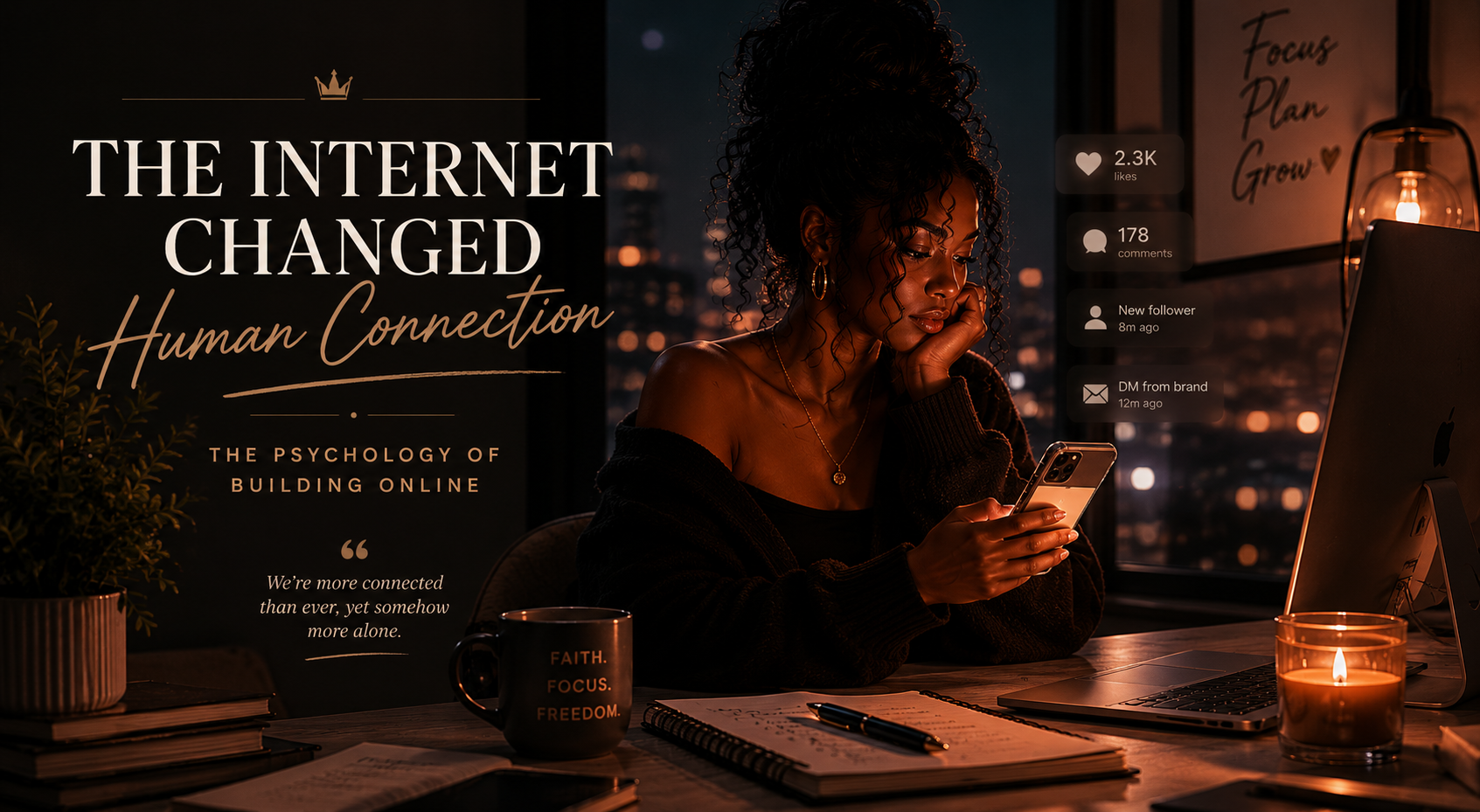
This psychological shift has quietly changed how many people experience self-worth, validation, and relationships online. Social media platforms reward visibility. Likes, comments, shares, reposts, views, and follower counts create measurable forms of approval that people can monitor in real time. For creators especially, attention becomes more than social interaction. It becomes proof of relevance, significance, and emotional acceptance.
Over time, this can create a dangerous emotional confusion. The brain begins associating engagement with personal value. A post that performs well creates emotional relief. Silence can create insecurity. Positive reactions feel emotionally rewarding, while low engagement can feel strangely personal, even when algorithms are unpredictable and constantly changing.
The internet has essentially created an environment where validation is quantified.
For many people, especially creators and influencers, this creates an emotional dependency that is difficult to recognize while living inside it. Attention becomes comforting. Notifications become emotionally stimulating. Audience interaction begins activating the same psychological reward systems associated with social approval and connection. The more visible someone becomes online, the easier it becomes to unconsciously depend on attention as emotional reassurance.
This does not mean online relationships are fake or meaningless. Many genuine friendships, communities, and supportive spaces exist online. People have found connection, healing, education, and belonging through the internet in powerful ways. However, digital attention is often inconsistent, unstable, and performance-driven. What makes internet validation psychologically complicated is that it is frequently tied to visibility rather than intimacy.
Someone can receive thousands of likes and still feel emotionally disconnected.
This is one of the strange contradictions of internet culture. Platforms create the appearance of constant connection while often deepening feelings of loneliness underneath the surface. A person may feel highly visible online while simultaneously feeling unseen in real life. Attention can temporarily imitate emotional closeness without fully replacing genuine human connection.
Social media platforms are also designed to encourage emotional dependency through intermittent rewards. Psychologists have long studied how unpredictable reward systems increase compulsive behavior. Similar to slot machines, social media platforms deliver inconsistent bursts of validation that keep users repeatedly checking notifications, engagement, and audience reactions. The unpredictability itself strengthens emotional attachment to the platform.
For creators, this cycle can become especially intense because attention is often directly connected to income, opportunity, and growth. Visibility can lead to sponsorships, partnerships, monetization, and career success. As a result, attention stops feeling optional. It begins feeling necessary for survival.
The emotional consequences of this environment are becoming increasingly visible. Researchers studying social media behavior and creator culture have raised concerns about anxiety, emotional exhaustion, comparison addiction, and the psychological effects of constant digital validation. Many people report feeling emotionally dependent on engagement while simultaneously feeling drained by the pressure to remain visible online.
The internet also encourages people to perform versions of themselves that receive the strongest reactions. Over time, creators may begin noticing which emotions, opinions, aesthetics, or personality traits attract the most engagement. The pressure to maintain that version of themselves can slowly distort identity. Instead of asking who they genuinely are, many people begin asking which version of themselves people respond to most positively.
That shift quietly changes relationships as well.
When attention becomes emotionally tied to worth, rejection can feel amplified. Silence feels heavier. Being ignored online can trigger emotional responses that feel deeply personal. In some cases, creators become trapped between craving attention and resenting the pressure that comes with constantly needing it.
The internet did not invent loneliness, insecurity, or the human desire for love. What it did was create systems capable of monetizing those emotional needs at an enormous scale. Platforms benefit from keeping people emotionally invested in visibility, comparison, validation, and audience reaction because emotional investment increases engagement.
Attention keeps people returning.
Yet attention and love are not the same thing.
Attention is visibility.
Love is presence.
Attention can be temporary, inconsistent, and transactional. Love is usually quieter. It exists in stability, trust, understanding, safety, and genuine emotional connection. One can be measured publicly. The other often cannot.
Perhaps one of the healthiest things people can learn in modern digital culture is how to separate visibility from worth. The internet may continue rewarding performance, popularity, and constant attention, but emotional well-being still depends on something deeper than audience reaction.
Human beings do not simply need to be watched.
They need to be genuinely known.
Sources
Social Media & Validation
- American Psychological Association (APA) — Research on validation, self-esteem, social approval, and emotional well-being.
Digital Behavior Research
- Pew Research Center — Research on social media use, online relationships, and digital communication patterns.
Mental Health & Social Connection
- National Institutes of Health (NIH) and National Library of Medicine (PMC) — Studies examining social validation, loneliness, online engagement, and psychological well-being.
Public Health Research
- U.S. Surgeon General Advisory on Social Media and Mental Health — Research on the emotional effects of social media and digital environments.
Creator Mental Health
- Harvard T.H. Chan School of Public Health — Research on creator well-being, audience pressure, and the psychological effects of online visibility.
