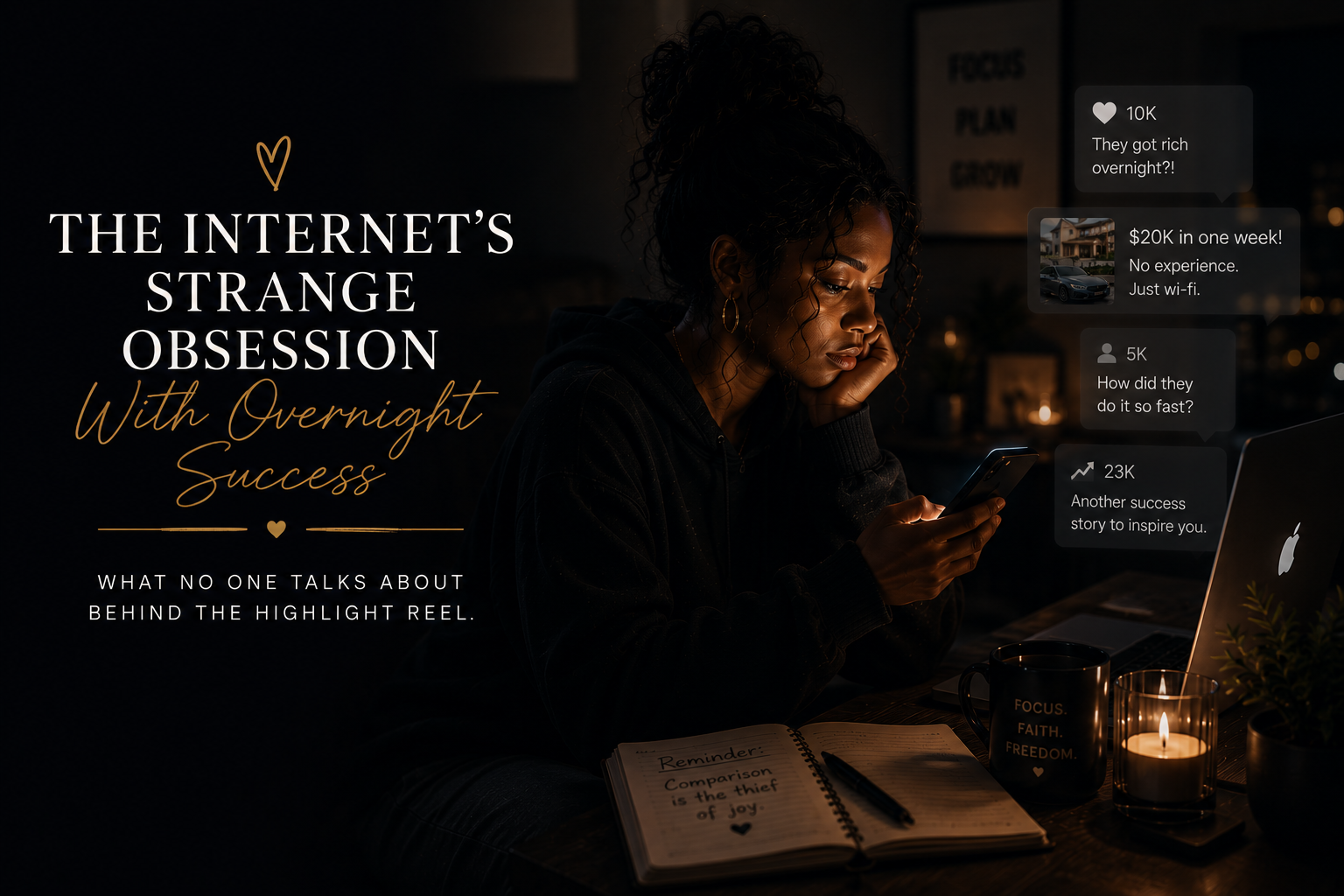
The Internet’s Strange Obsession With Overnight Success
The Internet Rewards Performance, Not Peace
The internet has quietly changed the way people experience ambition, productivity, and even self-worth. What once began as a space for creativity and connection has evolved into an environment built around constant visibility. Modern online culture rewards people who remain active, entertaining, productive, opinionated, and consistently present. The more visible a person becomes online, the more pressure they often feel to continue performing. Over time, many creators begin discovering that the internet does not necessarily reward peace, balance, or emotional well-being. It rewards attention.
For many people building online businesses or personal brands, this pressure develops slowly. In the beginning, posting online feels exciting. Growth feels validating. Notifications feel encouraging. Success stories create motivation. However, as audiences grow and engagement increases, the emotional relationship with content creation often changes. A single successful post can create enormous psychological pressure to repeat that success. What once felt creative can slowly begin to feel performative.
This is one of the most overlooked realities of modern internet culture. Online platforms reward consistency, speed, and engagement. Algorithms favor creators who post frequently and remain active. As a result, many people begin feeling guilty when they rest. Taking a break can feel dangerous, especially in industries where visibility directly affects income, growth, and relevance. Even short periods of absence may trigger fears of being forgotten or replaced.
The pressure becomes even more intense because the internet encourages endless comparison. Every day, people are exposed to carefully curated images of success. Someone is always earning more money, growing faster, posting more consistently, or appearing more disciplined. Social media creates the illusion that everyone else is constantly succeeding while quietly hiding the exhaustion required to maintain that image. Over time, many creators begin measuring their value through engagement numbers rather than emotional stability.
This can create a dangerous psychological cycle. A successful post creates temporary validation. A decline in views or engagement creates anxiety. The emotional highs and lows of online performance begin shaping self-esteem. For creators whose identity and income are deeply connected to visibility, the pressure can become emotionally exhausting.
Part of the problem is that creators are often monetizing themselves rather than simply a product. Their personality becomes part of the brand. Their opinions become content. Their lifestyle becomes content. In some cases, even their struggles become content. The line between authentic identity and online performance slowly becomes harder to separate.
Researchers examining creator culture and social media behavior have increasingly raised concerns about burnout, anxiety, emotional exhaustion, and the mental health effects of constant online visibility. Studies suggest that engagement-based platforms can strongly influence emotional well-being, particularly when validation becomes tied to audience reaction and performance metrics. Many creators report feeling trapped between maintaining visibility and protecting their mental health.
The structure of the internet itself also contributes to this problem. Social media platforms are designed to reward stimulation and emotional reaction. Outrage spreads quickly. Controversy spreads quickly. Emotional intensity spreads quickly. Calmness, privacy, and stillness rarely receive the same attention. As a result, many creators feel pressured to remain constantly active to stay relevant.
Calm people rarely go viral.
This creates a deeper conflict for many people trying to build healthy lives online. Real emotional well-being often requires boundaries, rest, slowness, privacy, and disconnection. Internet culture encourages the opposite. It rewards overexposure, nonstop accessibility, and constant participation. The healthier someone becomes emotionally, the less naturally compatible they may sometimes feel with the demands of online culture.
None of this means online business or content creation is inherently unhealthy. The internet has created extraordinary opportunities for millions of people. Many creators genuinely love creating content, building communities, and sharing ideas online. Digital platforms have given people freedom, education, income, and creative independence. The issue is not ambition itself. The issue begins when performance becomes inseparable from identity.
Eventually, many creators stop asking themselves what they genuinely want to create. Instead, they begin asking which version of themselves performs best online. That shift can quietly transform creativity into emotional survival.
Perhaps the future of a healthier online business is not becoming more optimized for algorithms. Perhaps it is learning how to remain human while existing inside systems designed to constantly demand attention. The internet may reward performance, but human beings still need peace to live healthy and meaningful lives.
Sources
- Harvard T.H. Chan School of Public Health — study on creator mental health, burnout, and obsessive concern over content performance.
https://hsph.harvard.edu/news/content-creators-are-struggling-with-mental-health-study-finds/ - The Guardian — reporting on creator burnout, algorithm pressure, and emotional exhaustion among social media creators.
https://www.theguardian.com/media/2025/jul/05/cant-pause-internet-social-media-creators-burnout - Wired — influencer burnout, dopamine addiction, and mental health concerns in creator culture.
https://www.wired.com/story/influencer-burnout-mental-health-service-creativecare/ - ScienceDirect — research examining platform pressure and labor expectations within the creator economy.
https://www.sciencedirect.com/science/article/pii/S0167811624000545 - arXiv — research on online feedback, social validation, and mental health effects tied to social media engagement.
https://arxiv.org/abs/2312.11914
Because understanding the internet starts with understanding the humans using it.
